
What kind of leader succeeds in uncertain times?


Are you waking up and wincing as you open your news app? If you are, your team is too.
Uncertainty of any kind can spill into our work lives, and in some cases, affect businesses directly. Our job, as leaders, is to keep the ship steady, but how do we do that when we feel unsteady ourselves?
Living in uncertain times can be down to many factors – whether it’s global pandemics, wars or financial crises; there are times when there may be decisions happening at a government and global level affecting all of us.
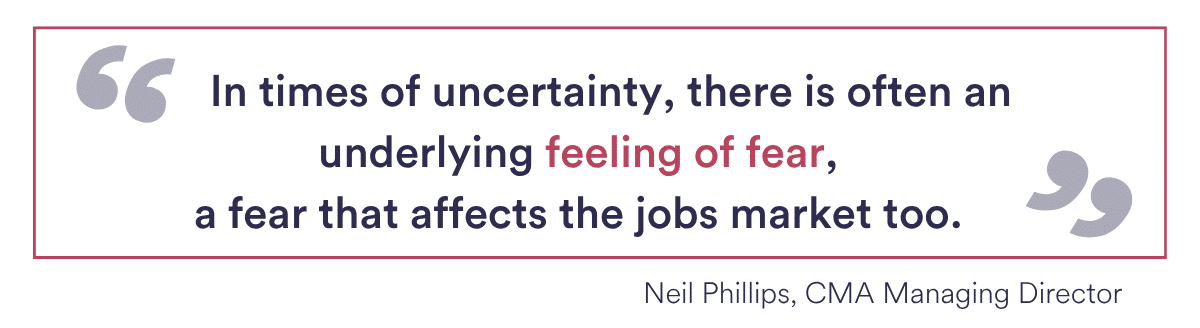
In these circumstances, it is understandable if you are moving more cautiously and pessimistically than usual. In times of uncertainty, there is often an underlying feeling of fear, a fear that affects the jobs market too. This can result in us seeing an influx of people being laid off and looking for work, whilst businesses simultaneously tighten their belts and limit recruitment.
The outcome of this looks like the people you already have are likely either with you, or quietly checking out – and which one it is, comes down to how you’re leading right now.
Leadership trust in uncertain times
A Gartner Organisation Structure survey of over 3,500 employees showed that employees who trust their leaders score 83 on engagement, those who don’t score 58. That’s a 25-point gap. And our own Salary Survey of over 3,000 respondents showed 44% of employees cited ‘Quality of leadership and management’ as the biggest factor affecting their engagement.
Being the leader your team needs and steadying yourself in these uncertain times is critical. Now is a time to remember what you CAN control:
- Focusing on your team
- Building trust
- Owning decisions with clear communication
- And moving you and everyone else away from that place of fear.
Here are three things that are data-backed trust builders for you and your team…
Open communication with your team
Most leaders aren’t withholding information to be difficult; they’re just not sure what to say – or when. But your team will fill that silence with something, and it’s rarely optimistic. An anonymous feedback survey is a simple way to open that channel: it shows you’re listening before you even know what they’re going to say.
Gartner found that employees are 20% less likely to trust leaders they believe are concealing information. Respond to what comes back, even if the answer is “we’re working on it”, being heard is one of the most valuable things you can offer your team.

Transparency around decision making
When things are uncertain, the instinct is to project confidence, to have the answers, to seem in control. But your team aren’t looking for certainty, they’re looking for honesty. Owning a difficult decision, explaining your thinking, and being willing to say “I don’t know yet” builds more trust than a polished answer ever will.
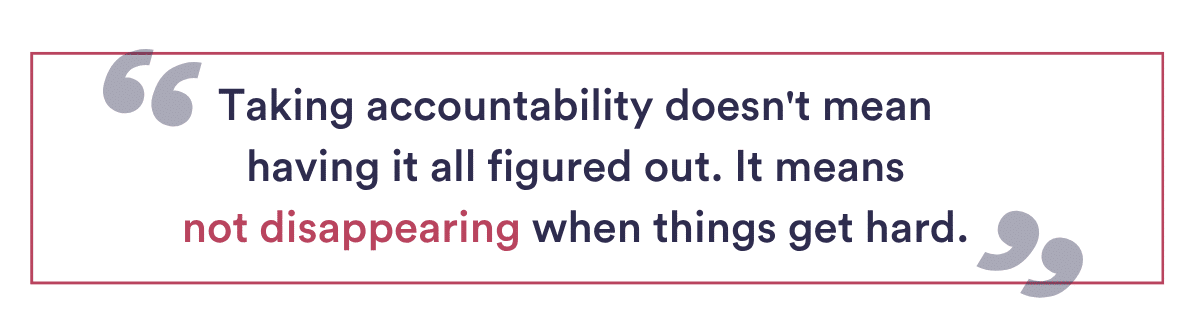
Gartner found employees are 30% less likely to trust leaders who shift blame onto external factors. Taking accountability doesn’t mean having it all figured out. It just means not disappearing when things get hard.
Investing in your team
40% of respondents in our Salary Survey said employee development either wasn’t a focus or needed improving. Development spend is often the first thing cut, which sends exactly the wrong message. Investing in your team’s growth right now says we’re planning for a future that includes you. That’s not a small thing when people are quietly wondering if they have one.
None of us has a map for this. But the leaders who come out of uncertain times with their teams intact aren’t the ones who had all the answers, they’re the ones who stayed present and kept talking. That’s available to all of us, right now.
If this resonates and you’d like to talk through what this looks like in your business, we’d love to hear from you. Get in touch.
