
Why you need to continue investing in employee engagement


Are you investing in retention? Here at CMA, we’re seeing a growing theme of reduced focus on staff retention and staff development for businesses in the South. This is primarily due to greater focus on business performance, cost-control measures and more confidence in this ‘looser’ job market.
With this comes a risk further down the line. In this article, we explore why leaders need to continue investing in employee engagement for business success, and how this engagement directly impacts retention.
In the latest CMA Salary Survey, we uncovered a trend for a reduced focus on employees in the region. Our report highlights:
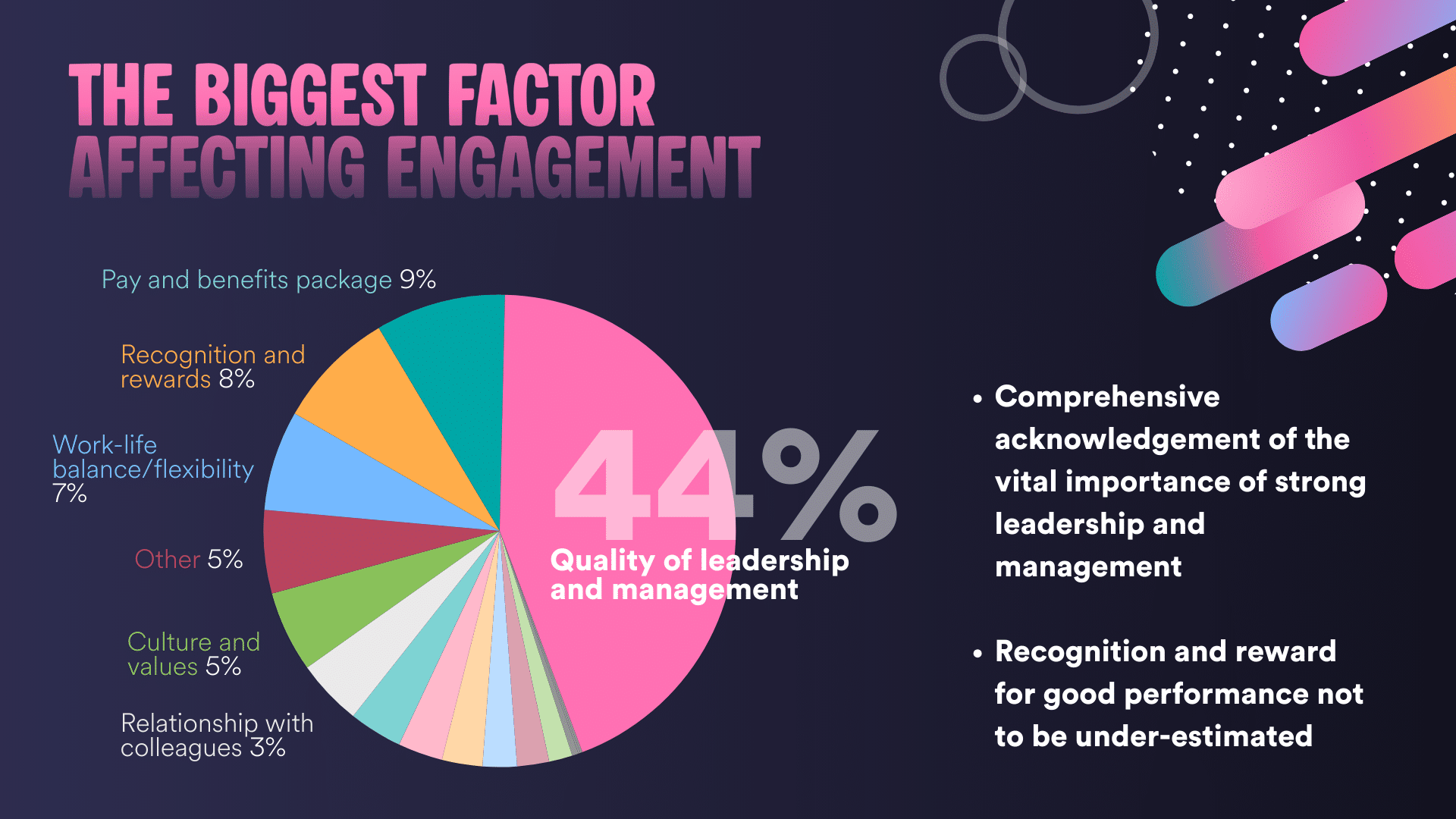
1. The growing importance of leadership quality (cited by 44% as the top engagement driver)
2. The shift towards flexible working as the most attractive benefit
3. The impact of reduced focus on employee retention amid tighter budgets.
CMA Managing Director Neil Phillips explains: “Our latest findings from over 2300 respondents show that as employers we’re currently less focussed on people engagement, people retention and people development.
What the results show
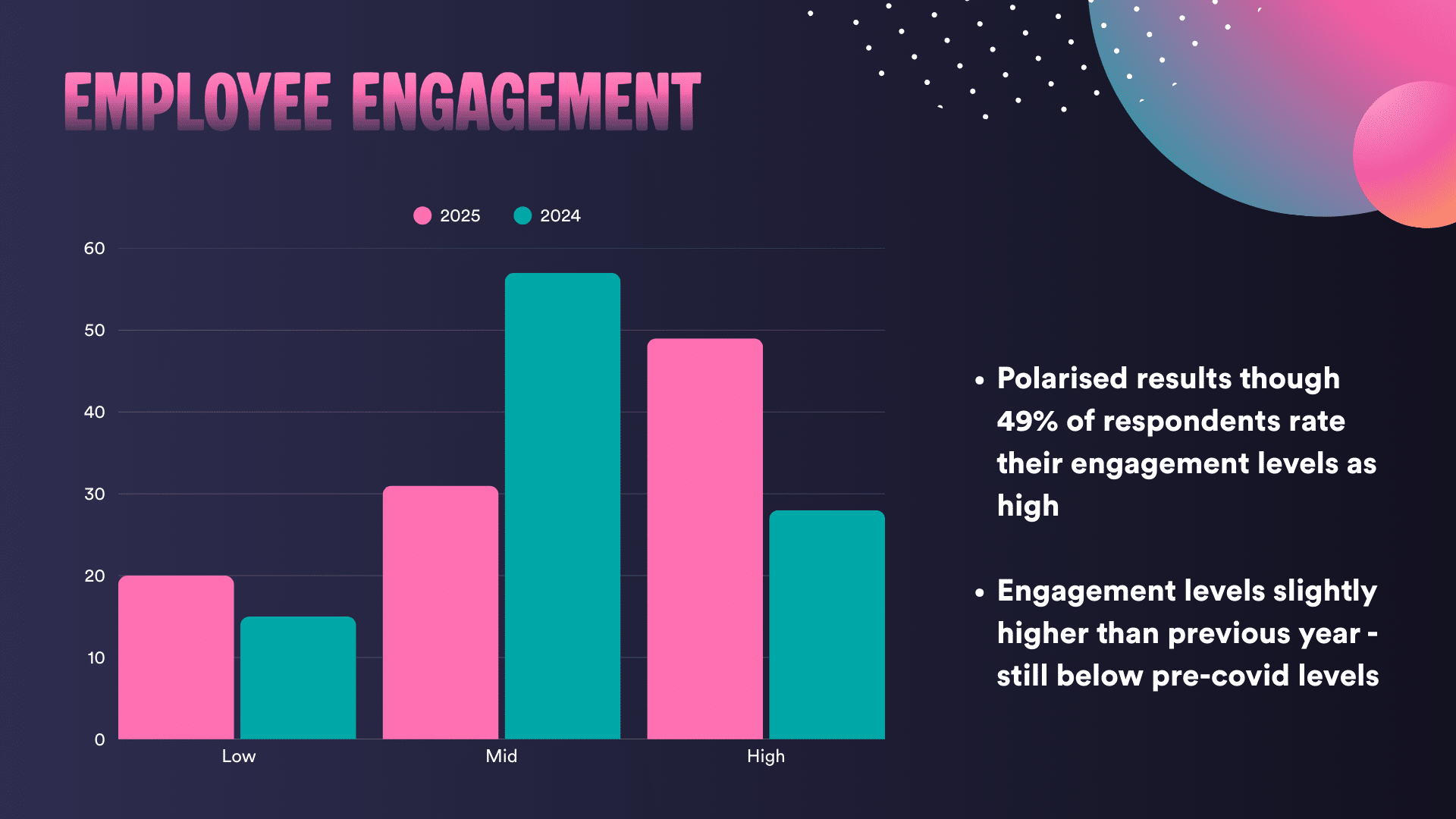
The salary survey results showed a polarised view, but almost half of respondents rated their engagement levels at the end of 2025 as high, an increase from 2024 although still significantly lower than pre-covid levels of employee engagement.
Right now, employees are happy, but without leaders nurturing this through strategic employee engagement plans, this level of engagement will slip.
What is impacting employee engagement?
Quality of leadership & management is the biggest factor affecting ‘employee engagement’ with 44% of survey respondents supporting this. There’s even more data to back this up; a study by Gallup found that managers can impact their employees’ engagement by as much as 70%.
More often than not people don’t leave companies, they leave managers.” Neil explains, “Lack of career growth, salary and benefits are of course always important to employees but the relationship between employee and manager is critical”.
This makes investment in training for management and empowering them with tools to support their team members even more essential – as these are the means for senior leadership teams to reap the benefits of improved employee engagement and retention.
Beyond management, according to our survey, other factors impacting engagement are:
- Pay and benefits
- Recognition and rewards
- Work-life balance
- Culture and values.
Why employee engagement is about more than just productivity
Yes, engagement has a massive impact on employee productivity – happy and engaged employees do their best because they believe in what they are doing. But engagement is about more than productivity.
Engagement has a company-wide impact. According to Forbes: “Employees who are engaged, pay close attention to detail, and show pride in their work create a general work culture that exudes positivity, which can filter through to all levels of the organization.”
And what happens to unhappy employees? They leave – it’s really that simple! Reducing a focus on employee engagement now, might make sense in the short term, while your attention is seemingly needed elsewhere, but in the long term your business is going to face higher recruitment costs as you attempt to replace valuable employees.
Four ways to ensure engaged employees
1. Look at what’s important to your team. While pay and benefits packages, culture and values all play a part, as we’ve demonstrated, the quality of the leadership team is a huge factor. Ascertain these factors and you’ll have a better understanding of ‘what good looks like’ to your employees.
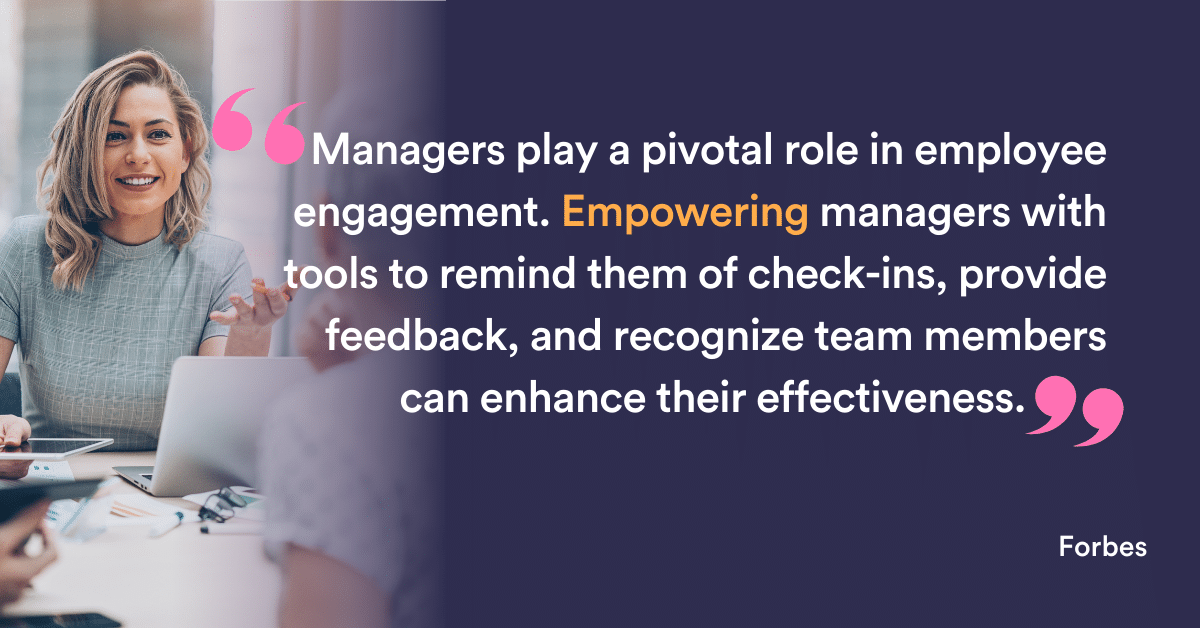
Forbes recommends supporting managers to foster connections: “Managers play a pivotal role in employee engagement. Empowering managers with tools to remind them of check-ins, provide feedback, and recognize team members can enhance their effectiveness.”
2. Recognition and reward for good performance should not be underrated as they go a long way to making sure employees feel valued. Pay and benefits packages go hand in hand with this. According to our Salary Survey, together these factors took a big slice of the pie and made up 17% of the most-cited reasons from our respondents.
3. Prioritising mental health is essential when it comes to maintaining employee engagement. According to Gallup: “Employees who strongly agree that their employer cares about their overall wellbeing are three times more engaged and 71% less likely to report experiencing burnout.”
4. Scrutinise your onboarding process to ensure it is fully optimised – and this process should begin from the pre-start ‘danger zone’ right through the first few months (or even up to a year) at work.
The benefits of this are long-lasting, as Forbes explains: “Effective onboarding reduces first-year turnover dramatically, turning new hires into long-term, engaged employees.”
Investing in employee engagement and retention should be part of both a short- and long-term strategy for leaders, as a key part of future-proofing a company and ensuring business success!
If you’d like to discuss more about the important factors affecting engagement and retention in your organisation and how CMA can help you, get in touch with your local office today.